
Pipe Relining Technology for Slab Leak Repair: A Modern Solution to an Old Problem
You know that sinking feeling when you hear water running — but nothing’s turned on? Or worse, when you spot a warm spot on your floor that just won’t dry? That’s a slab leak. And honestly? It’s one of the most dreaded home repairs out there. But here’s the good news: pipe relining technology has changed the game. No more jackhammering your foundation. No more weeks of chaos. Let’s break it down.
What Exactly Is a Slab Leak?
First things first — a slab leak happens when a pipe buried under your concrete foundation springs a leak. It’s not a matter of if, but when, for many homes, especially older ones with copper pipes. The signs? Well, they’re subtle at first. A spike in your water bill. The sound of trickling water when everything’s off. Maybe some cracking in your tile or a musty smell that just won’t quit.
In the past, fixing this meant one thing: breaking up the slab. That’s messy, expensive, and disruptive. But pipe relining? It’s like giving your pipes a second life — from the inside out.
So, How Does Pipe Relining Work?
Alright, let’s get into the nitty-gritty. Pipe relining — sometimes called Cured-in-Place Pipe (CIPP) — is a trenchless technology. That means no digging up your floor. Here’s the deal:
- Inspection first — A camera goes down your pipe to find the leak and assess damage.
- Cleaning the pipe — High-pressure water or mechanical tools scrub the inside clean. No debris, no buildup.
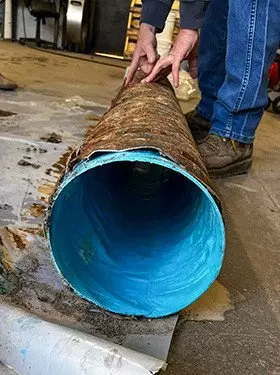
- Inserting the liner — A flexible, epoxy-saturated tube is fed into the pipe. It’s like a sock for your plumbing.
- Curing it — Hot water, steam, or UV light hardens the epoxy. In a few hours, you’ve got a brand-new pipe inside the old one.
That’s it. No jackhammers. No dust clouds. No living in a construction zone for weeks.
Why This Matters for Slab Leaks Specifically
Slab leaks are tricky because the pipe is literally encased in concrete. Traditional repair means cutting out a chunk of your foundation, fixing the pipe, then repouring concrete. That’s not just expensive — it’s a nightmare for your flooring, your schedule, and your sanity. Pipe relining skips all that. The liner goes through existing access points (like a cleanout or a water heater connection). Your slab stays intact. Your floors stay beautiful. Your life stays… normal-ish.
The Pros and Cons — Let’s Be Real
Nothing’s perfect, right? Pipe relining has huge advantages, but it’s smart to know the trade-offs.
| Pros | Cons |
|---|---|
| No slab demolition needed | Not ideal for severely collapsed pipes |
| Faster — often done in a day | Requires clean, accessible pipe ends |
| Durable — epoxy liners last 50+ years | Cost can be higher than a simple patch |
| Corrosion and root resistant | May reduce pipe diameter slightly |
| Less mess, less stress | Needs a skilled installer (not a DIY job) |
Honestly, for most slab leaks, the pros outweigh the cons by a mile. But if your pipe is totally crushed or has major bellies (sags where water pools), traditional replacement might still be the call.
Is Pipe Relining Right for Your Slab Leak?
Sure, it sounds great — but how do you know if it’ll work for your home? Well, here’s a quick checklist:
- Pipe material: Works on copper, PVC, cast iron, and galvanized steel. Most slab leaks involve copper, so you’re likely good.
- Pipe condition: Needs to hold shape. If it’s collapsed or severely deformed, relining might not be possible.
- Access points: You need a way to get the liner in. Usually, that’s at the water heater or a cleanout.
- Leak location: Under a slab? Perfect. Under a driveway? Also works.
That said — always get a camera inspection first. It’s the only way to know for sure.
What About the Cost?
Let’s talk money. Traditional slab leak repair can run anywhere from $1,500 to $4,000 just for the patch — and that’s if the leak’s easy to find. If they have to cut multiple holes? You’re looking at $5,000 to $15,000 or more. Pipe relining for a single slab leak typically falls between $3,000 and $6,000. But here’s the kicker: that often includes all the pipes in that run, not just the leaky spot. So you’re getting a full upgrade, not a band-aid.
And honestly? The peace of mind? Priceless. No more wondering if the next section of pipe is about to fail.
Common Myths About Pipe Relining — Busted
I hear a lot of misconceptions. Let’s clear a few up:
“It’s just a temporary fix.” Nope. The epoxy liner is structural. It’s designed to last 50 years or more. In fact, it’s often stronger than the original pipe.
“It reduces water flow too much.” Sure, the inner diameter shrinks by a fraction of an inch. But for most residential pipes (3/4″ to 1″), the difference is negligible. You won’t notice it in your shower.
“It’s only for big companies.” Actually, many local plumbers now offer this service. It’s becoming standard — like replacing a water heater.
“I can do it myself.” Please don’t. The equipment is specialized. The epoxy needs precise mixing and curing. One mistake, and you’ve got a hardened mess in your pipes. Leave it to the pros.
The Process Step-by-Step (What You’ll Experience)
If you decide to go with relining, here’s what a typical day looks like:
Morning: The crew arrives. They set up a small work area near the access point. No heavy machinery. No jackhammers. Just a truck with a compressor and some hoses.
Mid-morning: They run a camera through the pipe to confirm the leak location and check for any surprises. Then they clean the pipe — this can be noisy, but it’s over in about an hour.
Lunchtime-ish: The liner goes in. It’s fed through a control panel, then inflated with air or water to press it against the pipe walls. You might hear some hissing, but it’s not disruptive.
Afternoon: Curing time. Depending on the method, this takes 2 to 4 hours. The crew monitors temperature and pressure. You can go about your day — just maybe avoid running water during that window.
Late afternoon: Final camera inspection. They show you the new, smooth pipe interior. Then they pack up. Done.
No dust. No debris. No sleeping on the couch while your kitchen floor is a crater.
When Traditional Repair Still Makes Sense
Look, I’m not saying pipe relining is always the answer. If your pipe is completely crushed — like, flattened — relining can’t fix that. You’d need to excavate and replace that section. Same goes for pipes with major bellies or those that have shifted out of alignment. But honestly? Those cases are rare. Most slab leaks are pinhole leaks or small cracks. And for those, relining is a no-brainer.
Also, if you have polybutylene pipes (the grey stuff from the 80s and 90s), relining isn’t recommended. Those pipes need full replacement. But that’s a whole other article.
Final Thoughts — Why This Technology Matters
Here’s the thing about slab leaks: they’re not just a plumbing problem. They’re a home invasion. They disrupt your space, your routine, your sense of safety. Pipe relining technology gives you a way out — a way to fix the problem without tearing your home apart. It’s clever. It’s efficient. And honestly? It’s kind of beautiful in its simplicity.
So if you’re dealing with a slab leak — or think you might be — don’t panic. Don’t let anyone talk you into a demolition job without asking about relining first. Get a camera inspection. Ask questions. And remember: sometimes the best fix is the one you never see.
Your home’s foundation is solid. Your pipes don’t have to be a mess.